
Uncategorized

Looking at ways to reduce costs for ice rink refrigeration?

Everyone asks about this and many have written about it. So Consider this; Ice rinks use a lot of energy. Energy prices are rising and governments everywhere are adding carbon taxes, so what is an operator to do? If balanced and promoted correctly Ice rinks can be a very lucrative, but you have to take care of business and optimize. Ice arenas are some of the most energy-intensive commercial buildings in a given community using a chiller system that requires pumps, fans, heating, lighting, dehumidification, domestic hot water, frost protection and comfort. approximately 16h per day on weekends and 12h per day on weekdays. In terms of energy consumption, this means that a typical single pad ice rink can use from 1,500 – 2,400 MWh/ year
and almost equal natural gas is consumed in MMBTU’s. Ice rink refrigeration systems cool a brine or glycol solution pumped through pipes embedded in a concrete slab or buried in a sand floor under the ice. 
Brine temps are usually around 16°F – 17°F. In order to keep high-quality ice, the surface is flooded 6 to 12+ times per day depending on usage with resurfacing water usually heated to 140°F -160°F. The largest portion of the energy use comes from the ice rink’s refrigeration systems, to ensure the necessary cooling to produce and maintain ice surfaces. The chiller removes heat from ice pads and the condenser disposes of the heat outdoors. On average, as much as 7.2 million Btu of heat, or more than 2,000 kWh, are generated each day by an ice plant. Luckily, there are many ways to reduce the load on the chiller system and therefore reduce the ice rink refrigeration cost. HOW TO REDUCE COSTS FOR ICE RINK REFRIGERATION: Add an energy management system Recover waste heat from a chiller system Add VFD’s or v ariable frequency drives Remove micro air bubbles from resurfacing water Add energy-efficient motors Replace arena slab Use head pressure controls Optimize brine use Replace old compressors Optimize humidity levels Adjust inside air temperature Optimize ice thickness Eliminate Solar gain to the ice surface Laser Levelling Monitoring Data 1. ADD AN ENERGY MANAGEMENT SYSTEM TO YOUR RINK’S REFRIGERATION SYSTEM A computer-controlled ice rink refrigeration system can provide 20% or more in energy savings in comparison to manually operated systems. Such an energy management system is able to adjust the plant to the present weather conditions and facility usage to run most efficiently. Pre-programmed settings make it easier to adjust the ice temperature depending on usage and can be applied for hockey, figure skating, and public skating. Off-hour programming will also help to reduce electricity consumption because it allows the ice temperatures to rise during nighttime hours, or inversely pre-chilling the ice prior to peak demand hours. 2. RECLAIM WASTE-HEAT FROM THE RINK Heat-recovery systems can harness heat as free energy from the ice rink refrigeration system. Most of the wasted heat comes from the refrigeration condenser, however, some heat can also be recovered from the building’s exhaust air. There are various usages for the waste heat such as space heating, domestic water heating, subfloor heating, slab heating, floodwater heating, ice melting, and preheating cold outdoor air for ventilation. 3. VFD’S OR VARIABLE FREQUENCY DRIVES VFD’s allow induction-motor-driven loads such as condenser fans and brine pumps to operate at rotational speeds. Electric motors in industrial applications can be more efficient when using VFDs in centrifugal load service. A variable speed drive controls motor speed and torque by varying the motor input voltage and frequency. By controlling motor speed to correspond with varying load requirements, retrofitting electric motors with VFD controls can increase motor energy efficiency—in some cases by as much as 50%. 4. REMOVE MICRO AIR BUBBLES FROM RESURFACING WATER Removing micro air bubbles from the flood water instead of heating the resurfacing water eliminates big parts of your water heating costs for your flood water AND saves 10% – 12% energy from your ice plant. Using extremely hot water not only requires energy to heat but also increases the refrigeration load because warm water is being applied directly to the ice. Instead of using extremely hot temperatures (140-160°F) for the resurfacing water, air bubbles can passively be removed with a rink de-aerator, and the temperature on the resurfacing water is lowered. This treatment of the resurfacing water results in harder, smoother ice that requires less maintenance. In addition, de-aerated water has fewer impurities than boiled water and can therefore be frozen at a higher temperature. Operators are able to reset their brine 3-5°F warmer and therefore reduce the run time on the compressors and save more electricity cost. 5. ADD ENERGY-EFFICIENT MOTORS New energy-efficient motors help the glycol pump/brine pump, water pump, and compressor motors save electrical energy through decreased usage and make the ice rink refrigeration equipment more efficient. Arenas can install soft-start controllers on the compressor motors. Soft-start controllers reduce inrush current and the resulting peak demand loads and reduce the strain on the compressor during the high torque generated at startup. 6. REPLACE ARENA SLAB In older ice slabs – for example more than 30 years – many components will need to be replaced. This will ensure its ongoing availability to the many local ice user groups and will avoid the added costs of emergency replacement. Over time, the ice slab will shift, which eventually causes the pipes underneath to crack and start leaking brine. Under the ice in arenas, there is a slab that is above the embedded brine (used to keep the ice frozen) tube network. A brand new slab and energy-efficient upgrades will result in gas, hydro, and greenhouse gas savings (GHG). 7. USE HEAD PRESSURE CONTROLS Ice rink chiller systems are often designed for higher outdoor temperatures. As a consequence, the head pressure is higher than needed. This leads to high condensing temperatures and increased electrical consumption. There is a benefit, especially in cold climates, to modulate the head pressure based on outdoor air temperature. This can yield refrigeration

Looking at ways to reduce costs for ice rink refrigeration? Read More »
Mobility, Golf Carts & Zamboni’s, Who Knew?

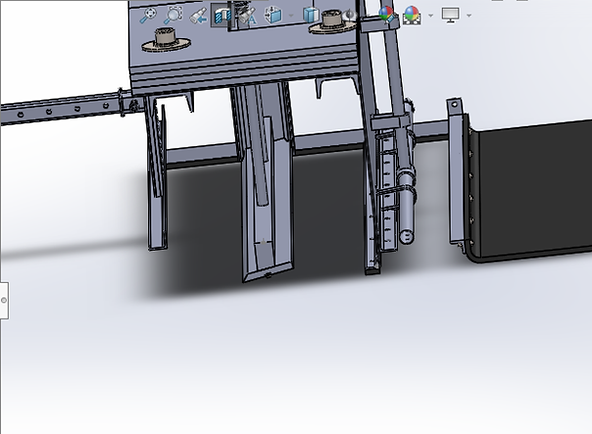
As an Ice rink developer we are tasked with coming up with solutions for an industry that historically has left the smaller guys behind. Everyone has a standard for NHL & Olympic sized ice surfaces. Specs. exist for these rinks and typically there are very few variations in the construction or refrigeration components. At DSB Management & Associates we offer unique solutions using our GEOIce TM heat pumps as the most energy efficient refrigeration system on the market today. Our geothermal solution is manufactured for us by Geosmart Energy of Cambridge Ontario. But this article is about Ice Resurfacing and the void we discovered for smaller rinks, public or private, and the options available to deliver top quality ice. Historically most people have heard the name Zamboni, whether it be in passing or attending a local hockey game. Zamboni always comes up as an observation point or admiration of Frank Zambonis creation, in-fact Wikipedia says “An ice resurfacer is a vehicle or hand-pushed device used to clean and smooth the surface of a sheet of ice, usually in an ice rink. The first ice resurfacer was developed by American inventor and engineer Frank Zamboni in 1949 in the city of Paramount, California.[1] As such, an ice resurfacer is often referred to as a “Zamboni” as a genericized trademark.” it is a globally respected brand, and as Wikipedia states it has become synonymous with all ice resurfacing units. Ice resurfacing, either automated or manual, all are referred to as Zamboni’s. When I grew up in small town Saskatchewan, We had every sport venue needed to keep us busy including an unheated ice arena with our own Zamboni. I like to think of it as Zamboni services. The first application was to remove the snow build up. As eager young hockey stars we would slap on our blades in between periods of “the Seniors” games and push plywood scrapers angled to the center of the ice to gather the snow. Lap by lap we would move the snow buildup or ice shavings to the back of the arena where it would be shoveled into the snow melt box, not a pit, an elevated plywood box where we would have the honor of running hot water over the snow to melt it down the drain, (man we have come along way with energy efficiency and water conservation). The next phase; as soon as we left the ice, on came the highlight of every arena in my day, the ice resurfacing unit was man-handled and hauled onto the ice. This was typically made up of 2-45 gallon drums welded together end to end. It had an open top filled with hot water mounted on a wooden skid with a rope attached to the front runners. The drums would feed a pipe drilled with 3/16″ holes about 3″ on center, connected to a 2″ ball valve controlling the flow of water dropping onto a chamois or towel pulled behind the tank. All of this adapted technology being pulled by our skilled technician that we called “the human Zamboni”. This still applies on many outdoor and indoor rinks where ingenious groups have devised the alternative to an automated system that does not exist for their own personal rink or a small practice rink etc. Until Now!! DSB Management And Associates, under our GEOIce TM brand has developed a complete line of what we term as “Mini-Zam” TMP solutions. No we do not have the sophistication of the Zamboni line of products, but what we do have are 3 separate power units sized for various applications and various turning radius, all self propelled, Radio or driver controlled, electric that pull a functioning resurfacing system that can either gather snow and flood simultaneously or you can add thickness control, or ice removal capabilities with the 316 stainless steel blade designed for a close shave or a deep removal/height reduction. (Cutaway Section of Model 3 Resurfacer, with outdoor neoprene attachment shown and cloth removed, blade, and weight plates attached) These units are robust, silent running on nylon skids, designed not to stick when flooding in minus 30 and below, They have adjustable heights to match any of the power units and have the option of being lifted in place by a linear actuator. All power units are electric with rechargeable batteries, with speed controls, forward and reverse with zero turn, 12′ and 6′ turning radius. As for the title of this blog “Mobility, Golf Carts & Zamboni’s, Who Knew?”, this is where it gets exciting. For each of the power units designed, the closer I got to refinement the more I could see the diversity in function for each option. I started with a Golf cart, tore it down and redesigned it to function in a miniaturized fashion to fit a specific application where I have an ice rink in a concrete box a story and a half below grade with no ingress or egress but we needed to be able to resurface the ice as best as we could. The alternatives on the market basically came down to offering the “Human Zamboni” or develop something to fit the need. Option 1 allowed me to deliver the function necessary. But as I was building this, the turning radius was a concern. Not necessarily on the ice surface. The dashers are designed with a 12′ radius exactly what I could manage with the cart option, but in the storage of the Mini-Zam. Once the Mini-Zam leaves the ice surface there is limited room to turn into the mechanical room assigned because the only exit off the ice surface is in the 12′ radius dasher. So Option 2 was born. I took the electric concept of the mini golf cart, eliminated 1 of the front wheels and had a custom ETrike built with load capacity to carry the flood tank on a rack over the rear wheels with enough power to pull a fully loaded resurfacing unit behind with cutting

Mobility, Golf Carts & Zamboni’s, Who Knew? Read More »

GEOIce – Geothermal Ice Rinks Reinvented

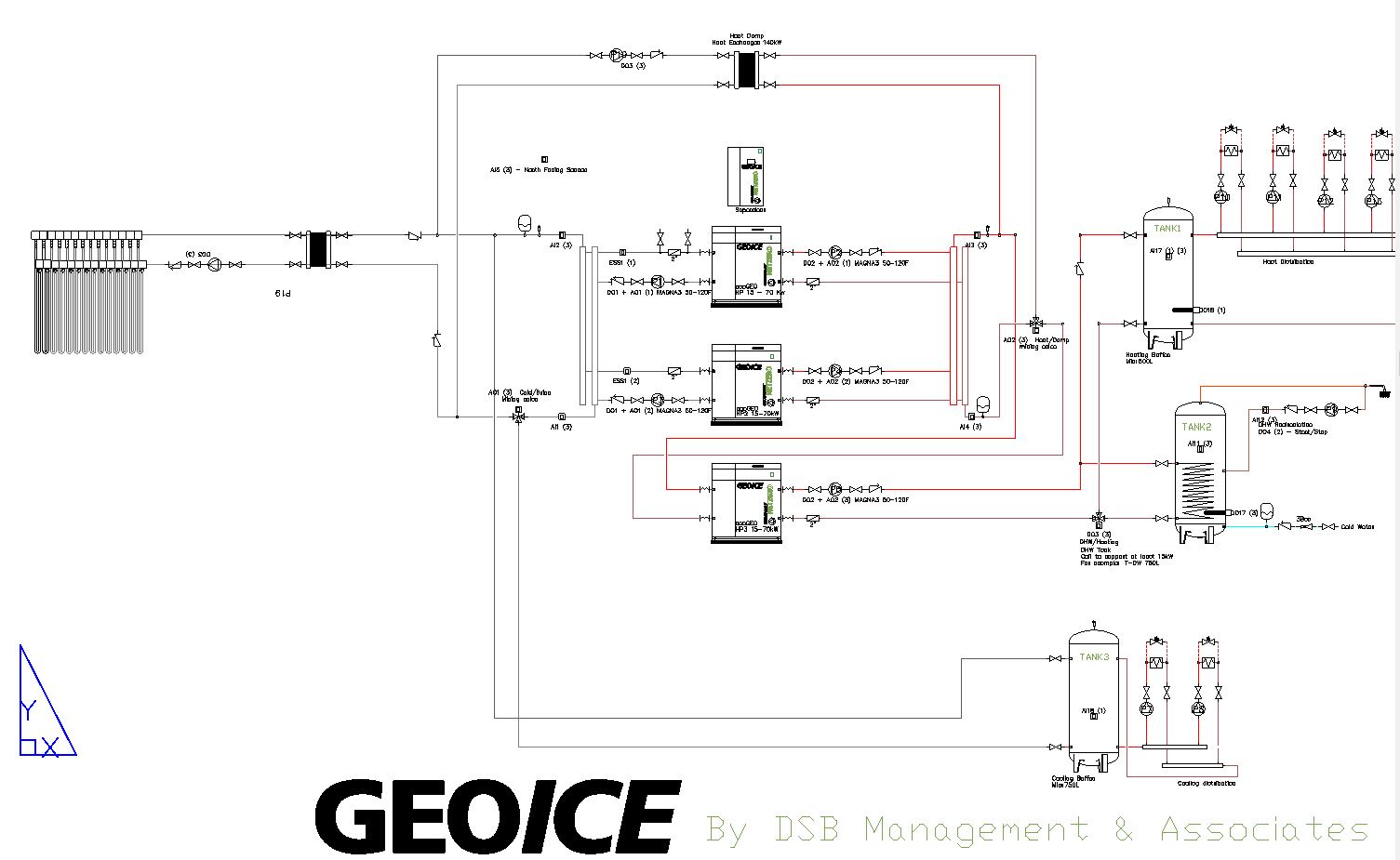
People always ask, what’s so special about Geothermal Ice Rinks vs conventional ice rink refrigeration systems that simply have one function and are designed solely to make ice. Lots to talk about here, but it essentially comes down to what I call the 3 (R’s); Refrigerant safety, Reject heat and Reduced energy. Historically, a well designed conventional chiller with a good control system that has been sized for the ice rink application, will do a good job of making and maintaining ice, but typically at the expense of waste heat recovery (R1) from the chillers, an obsolete or dangerous refrigerant like ammonia or R22 (R2) and with zero to marginal reduction in energy or conservation in mind (R3). At GEOIce, we do things differently. (R1) We capture 100% of the reject heat and apply it as free energy in the facilities systems. (R2) We use a very small amount of safety compliant refrigerant R410-A directly in our heat pumps and have the ability to change the refrigerant as mandated. Our circulating refrigerant is ethanol or alcohol -food grade. (R3) Our systems operate with a Coefficient of Performance (COP) of 4 or more, that’s 400% energy efficient. Understanding that, lets explore Ice Rink refrigeration: Most ice rink refrigeration systems are based on a typical vapor compression cycle. This is where a compressor is used to create low pressure in a heat exchanger, causing the liquid refrigerant to cool. The cold refrigerant chills liquid that is circulated through pipes in the ice rink floor making ice as water is applied to the floor surface. Energy absorbed from the ice by the chilled liquid is transferred to the cold refrigerant. The refrigerant has an extremely low boiling point and as energy is transferred to the refrigerant it warms to a point of boiling and it becomes a low temperature refrigerant gas. The refrigerant gas then passes through the compressor where it is pressurized and the gas temperature rises creating a hot gas that is pumped through another heat exchanger which is typically located outside as a cooling tower. The heat from the hot gas passing through the cooling tower is expelled to atmosphere/ the outdoor air. After the gas is cooled by the outdoor air or water in the cooling tower, it is drawn through the cycle again to transfer more energy from the ice and the cycle repeats itself 24 hours per day until and if setpoints are satisfied. Ice rinks use electricity to operate compressor motors, pumps and fans needed to drive the heat from the ice/Ice shed area to the outdoor air. This is done using the compressors to maintain the ice temperature by pulling the heat from the ice surface (and environment of the ice shed area) through the ice and transferring to atmosphere. Typically, there is no balance in the amount of waste heat generated by operations in comparison to the amount of thermal energy drawn from the ice/ice shed. This a general rule and no two ice rinks are the same, depending on the efficiency of the motors, the building envelope, outdoor temperature and numerous other factors. Ice rink facilities other than in a Pro or advanced setting are typically housed inside a building that has both an ice shed area where temperatures are not controlled as well as a temperature controlled portion. Temperature and humidity of the arena, ice shed area, lobby, offices, locker rooms etc. are controlled by multiple and separate mechanical systems used to provide comfort, domestic hot water, service hot water, etc. These include natural gas/fossil fuel furnaces, rooftop units, boilers, infra red heaters and so on. Humidity is typically controlled by condensing the moisture from the air using a vapor compression system, or by absorbing the moisture from the air using a desiccant wheel and vaporizing it by heating the desiccant with natural gas or other fossil fuels. Todays energy costs and government requirements have forced conventional ice rink refrigeration systems to look at methods of using some of the energy that is taken from the ice making process as a form of conservation. The challenge is the imbalance in the heating and refrigeration loads required in the building. For example; when the ice is used during the day and evening, occupants, lights and warmer outdoor temperatures reduce the need for heat in the building, but when the rink is used during the colder times of the year or as the sun sets, the refrigeration plant operates much less but the need for heat is greater. This is always a challenge to model and predict accurately, because you are betting against the weather, spectators, hours of sunshine etc. With conventional systems, thermal energy storage can only capture or hold a portion of the waste heat and the remainder is rejected to atmosphere through a cooling tower. How we design geothermal ice rinks is completely different. Our GEOIce Heat pumps are designed to extract heat from fluid as low as -4ºF (-20ºC) and as high as 85ºF (29ºC) to make and maintain ice while at the same time, we produce hot water ranging from 80 to 110ºF (27 to 43ºC) which can be boosted to 160Deg F if needed. We operate using the exact same principle as a conventional refrigeration plant. However, using heat pumps capable of operating at such large temperature ranges provides a great deal of design flexibility. We can extract energy from the ice like a conventional ice plant, but can also take energy from other sources like the air or ground while capturing all of the heat that is rejected in the ice production and maintenance. What that means in simple terms, is where a conventional system may have components designed to be 95% efficient, our GEOIce system can in fact operate at a co-efficient of performance of up to 700% when using all of the heat recaptured. Our typical design includes application of heat; in snow melt, flood water, domestic hot water, comfort, pool or spa heating

GEOIce – Geothermal Ice Rinks Reinvented Read More »

Shopping Cart

GeoIce Controls
Live Access Request

Access is provided to qualified facility owners, operators, and project partners who wish to evaluate the GeoICE geothermal ice technology and integrated building automation system.
Please submit your information below and we will provide secure viewing credentials to the live control dashboard